The internal political matrix of the ruling Congress party in Karnataka has officially arrived at a high-stakes crossroads. For nearly three years following the party’s emphatic return to power in Bengaluru, the delicate balance of administration has been heavily shadowed by an unresolved leadership arrangement. On Tuesday, May 26, 2026, the simmering Karnataka power tussle reaches Delhi as Chief Minister Siddaramaiah and Deputy Chief Minister DK Shivakumar landed in the national capital for parallel and unified huddles with the party’s absolute top brass.
Convened at the All India Congress Committee (AICC) headquarters at Indira Bhavan, the high-voltage huddle is being closely steered by Congress President Mallikarjun Kharge and Leader of the Opposition in the Lok Sabha Rahul Gandhi. While party handlers publicly insist that the agenda revolves strictly around selecting candidates for the upcoming Rajya Sabha elections and Legislative Council (MLC) polls, party insiders confirm that a definitive structural reset of the state leadership is the primary elephant in the room.
1. The Core Conflict: Rotational Formulas and Cabinet Desires
The political tension on display in New Delhi is rooted in the hard negotiations that took place immediately after the May 2023 assembly election victory. At that time, both leaders fiercely staked their claims to the chief minister’s chair.
While the high command ultimately backed Siddaramaiah to lead the government, loyalists of DK Shivakumar have persistently asserted that a secret “rotational chief ministership” formula was agreed upon, under which Shivakumar would take over the reins after the administration completed three years in office—a milestone the government reached on May 20.
+-----------------------------------------------------------------+
|               THE KARNATAKA DEADLOCK: TWO CAMPS                 |
+-----------------------------------------------------------------+
|  SIDDARAMAIAH CAMP                      DK SHIVAKUMAR CAMP      |
|  - Backed by AHINDA coalition           - Backed by Vokkaliga   |
|  - Demands Full 5-Year Term             - Demands Immediate Guard|
|  - Pushing for Cabinet Reshuffle        - Demands Clarity Before |
|  - Floating Alternative SC/ST Names     - Cites Resource Grid & |
|    to Dilute Transfer Options.          - Strong Organizational |
+-----------------------------------------------------------------+
The approach of the two leaders heading into Tuesday’s meeting perfectly illustrates this divide:
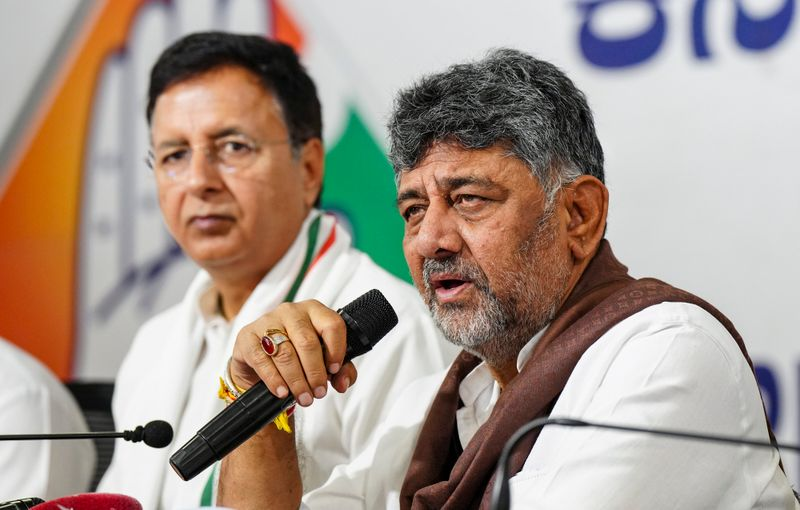
- Siddaramaiah’s Strategy: The Chief Minister arrived in Delhi flanked by a formidable delegation of senior ministers and loyalist MLAs. Siddaramaiah is pushing heavily for an immediate Cabinet expansion and reshuffle. By replacing underperforming ministers with fresh faces, his camp hopes to secure the alignment of disgruntled legislators and lock in his position for the full five-year term.
- DK Shivakumar’s Counter-Push: Shivakumar, who has also served as the state Congress president since July 2020, wants the central leadership to settle the question of leadership change before any changes are made to the Cabinet. His supporters argue that a transition must occur cleanly to protect organizational morale ahead of the upcoming municipal elections under the Greater Bengaluru Authority (GBA).
2. Chronology of a Day in Delhi: How the Tuesday Huddle Unfolded
The day began with highly coordinated political maneuvering across the national capital, balancing public displays of unity against intense behind-the-scenes lobbying.
1.The Loyalist Breakfast Audit:May 26, 2026 — 8:30 AM.
Chief Minister Siddaramaiah hosts an extensive breakfast meeting at Karnataka Bhavan. Senior ministers including G. Parameshwara, M.B. Patil, Satish Jarkiholi, and H.C. Mahadevappa gather to demonstrate a solid front of legislative backing before the high command meetings begin
2.The United Photo-Op:May 26, 2026 — 11:30 AM.
Siddaramaiah and Deputy CM DK Shivakumar arrive at the party headquarters at Indira Bhavan. Met by AICC General Secretaries K.C. Venugopal and Karnataka in-charge Randeep Singh Surjewala, the two leaders strike a smiling, united pose for national media pools to minimize public signs of friction.
3.The Isolated Deliberations:May 26, 2026 — 1:00 PM.
The central leadership initiates separate, closed-door discussions. Rahul Gandhi and Mallikarjun Kharge hold a detailed session with Siddaramaiah to evaluate government performance, followed by an independent, one-on-one session with DK Shivakumar to gauge organizational demands.
3. The Caste Matrix and Alternative Succession Plans
What initially began as a two-way power struggle between Siddaramaiah and Shivakumar has gradually evolved into a much more complex, multi-layered succession debate. Recognizing that a direct transition could fracture the state unit along caste lines, various factions have begun floating alternative leadership arrangements to the high command.
Siddaramaiah commands immense support among the AHINDA coalition (Alminorities, Backward Classes, and Dalits). If the high command decides to replace him to appease Shivakumar’s camp, it risks alienating these critical voting blocs. To counter Shivakumar’s Vokkaliga-backed claim, several senior ministers within the Siddaramaiah camp are aggressively arguing that if a leadership reset must happen, the chief minister’s post should go to a senior leader from the Dalit or Scheduled Tribe (ST) communities.
The Karnataka Leadership Aspirants Ledger
| Aspirant Leader | Primary Caste / Community Alignment | Current Administrative Stance |
|---|---|---|
| Siddaramaiah | Kuruba (Backward Classes) / AHINDA Anchor | Intends to complete the full term; states he will ultimately abide by high command directives. |
| D.K. Shivakumar | Vokkaliga (Dominant Landowning Caste) | Actively lobbying for the top post based on his organizational performance and resource mobilization. |
| Dr. G. Parameshwara | Dalit (Scheduled Caste) | Supported by the Siddaramaiah camp as the premier compromise candidate if a transition becomes mandatory. |
| Satish Jarkiholi | Valmiki (Scheduled Tribe) | Emerging progressive alternative gaining strong traction among younger MLAs and northern regional factions. |
| Mallikarjun Kharge | Dalit (National President Alignment) | Frequently cited by grassroots workers as an ultimate consensus builder, though national obligations limit local placement. |
The Opposition Angle: The opposition Bharatiya Janata Party (BJP) has been quick to capitalize on the public friction. State opposition leaders issued sharp statements on Tuesday, claiming that the prolonged indecisiveness of the Congress central leadership has paralyzed the state administration, turning governance into a casualty of internal party rivalries.
The High Command’s Balancing Act: What is at Stake?
For the national Congress leadership, resolving this power struggle requires a delicate balancing act. Karnataka is one of the largest and most economically vital states currently governed by the party, serving as a critical cornerstone for its broader political strategy across Southern India.
If the high command handles the transition poorly and triggers an open rebellion from either camp, it could destabilize the state government entirely. Conversely, allowing the public bickering and uncertainty to continue unaddressed risks deeply damaging the party’s governance image ahead of the crucial 2028 assembly elections.
As the late-night sessions continue in New Delhi, local political analysts suggest that the high command may look to implement a compromise formula: allowing Siddaramaiah to execute a limited Cabinet reshuffle to settle current internal dissent, while providing Shivakumar with a clear, public, and legally binding timeline for an eventual transition of power later in the year.
A Definitive Test of Leadership
The high-voltage meetings taking place across Delhi highlight a profound structural challenge for the ruling party. The phrase speculations are always there may be the standard line deployed by chief ministers to downplay internal tension, but the scale of the mobilization in Delhi proves that the situation has reached a critical tipping point.
Whether the Congress high command emerges from these discussions with a concrete succession blueprint or chooses to kick the can down the road yet again will shape the trajectory of Karnataka’s governance for years to come. For the millions of citizens in the state, the hope remains that clarity is reached swiftly, allowing the state administration to finally shift its focus away from internal power struggles and back toward public service and regional development.