The big problem with switching to energy is that we do not get power all the time. Solar panels only work when the sun is out and wind turbines need wind to work.. We need power all the time. To make this work power companies need to change the way they do things and store a lot of energy.
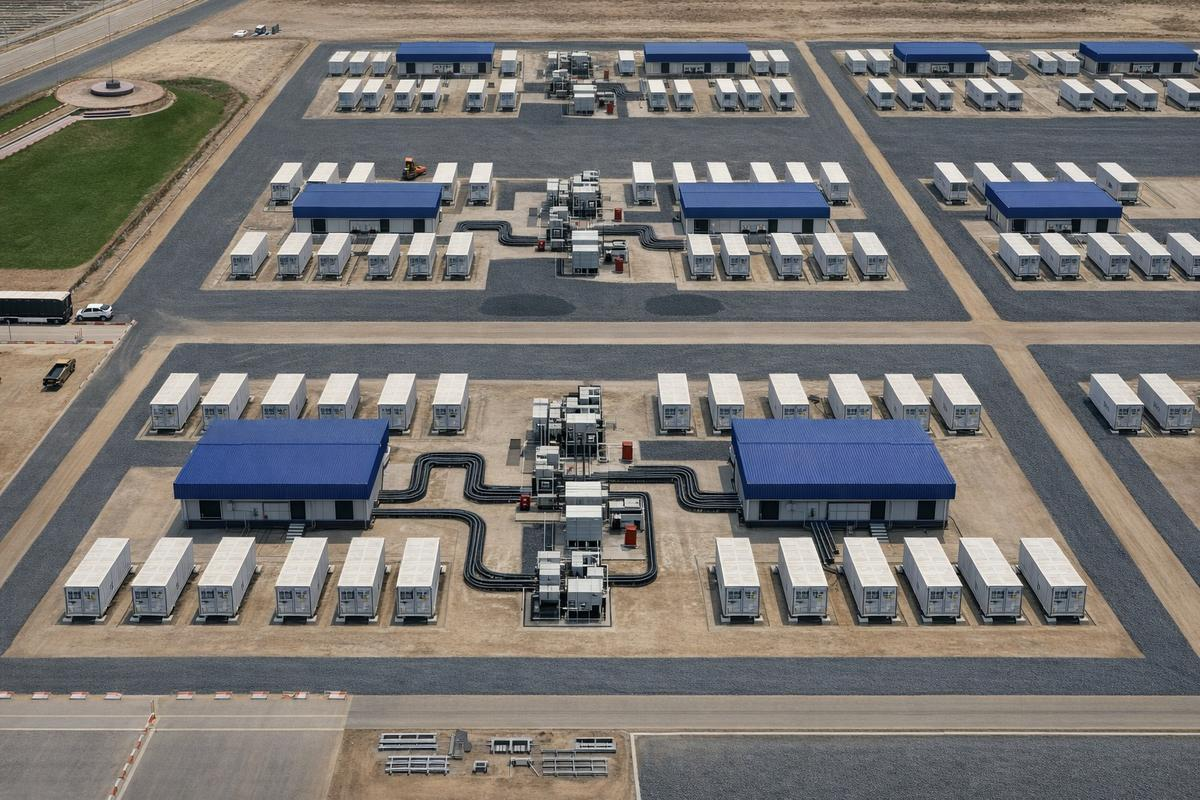
Adani Green Energy Limited has done something to help with this problem. On Tuesday May 26 2026 they said that their big energy storage system is working. This system can store 3.37 Gigawatt-hour of energy at their renewable energy place in Khavda, Gujarat.
This is a deal because it is one of the largest energy storage systems in the world. They built it in ten months which is really fast. This makes India a leader in storing energy for the power grid.
1. Deconstructing the Scale: Powering One Million Homes
The energy storage system in Khavda is really big. It is part of a renewable energy park in Gujarat. The system stores energy from solar panels and wind turbines during the day and sends it back to the power grid when people need it most which is usually, in the evening.
To put its 3.37 GWh capacity into perspective, look at its real-world delivery capability:
- Household Utility: The repository stores enough clean electricity to power nearly 10 lakh (one million) Indian homes for an entire day.
- Urban Integration: The system can single-handedly manage the peak electricity demands of major metropolitan areas such as Chandigarh or Indore, or fully back the energy consumption footprint of the entire state of Goa.
- The LED Benchmark: If deployed strictly for illumination, the stored energy could keep more than 12 million LED bulbs burning continuously for ten hours straight.
+-----------------------------------------------------------------+
|               KHAVDA RENEWABLE CLUSTER PROFILE (MAY 2026)       |
+-----------------------------------------------------------------+
|  - Active Grid Storage Capacity: 3.37 GWh (World Record)        |
|  - Speed of Execution: 10 Months from Groundbreak to Power-On   |
|  - Current Active Park Generation Portfolio: 9.9 GW             |
|  - Total Targeted Park Generation Blueprint: 30 GW by 2029      |
+-----------------------------------------------------------------+
2. The Multi-SPV Integration and Construction Timeline
The journey to this historic power-on sequence began in earnest following the Adani Group’s strategic entry into the grid-scale energy storage sector in late 2025. By March 2026, the company successfully commissioned the first phase of the development, establishing a baseline footprint of 1.37 GWh.
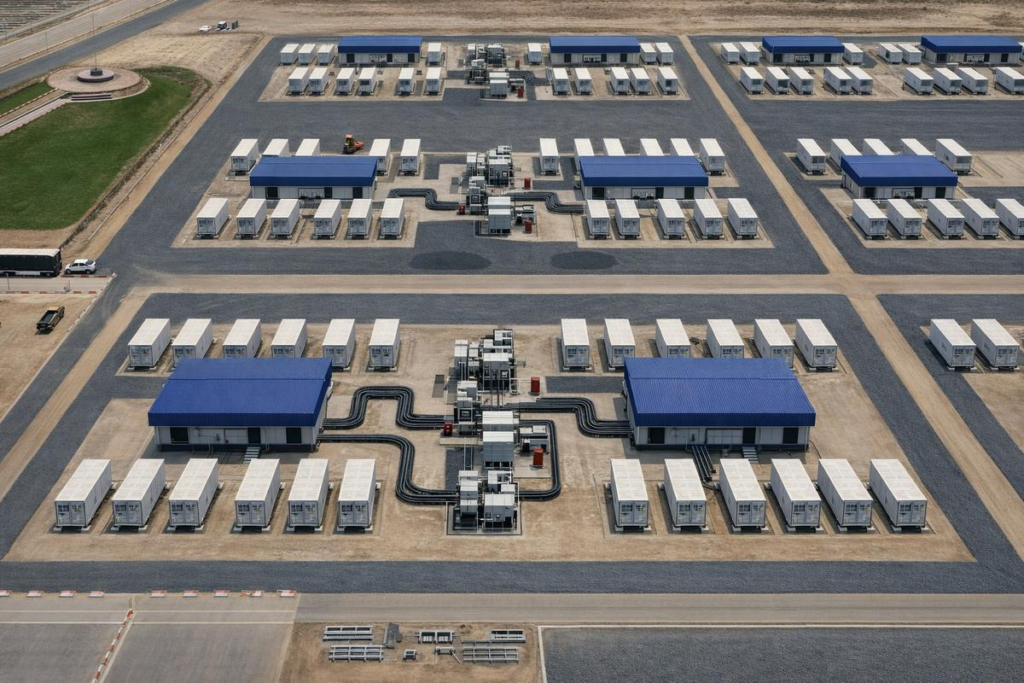
The final, record-breaking expansion was achieved through a multi-pronged development model executed via three specialized corporate entities (Special Purpose Vehicles). Following the receipt of the final regulatory clearances late Monday evening, the remaining 1.99 GWh capacity was formally pushed live effective May 26.
Architectural Breakdown of the 3.37 GWh Deployment
Review the specific technical distribution layout across the various corporate Special Purpose Vehicles (SPVs) that managed this massive industrial infrastructure project.
| Project Deployment Vehicle | Allocated Storage Capacity | Primary Technical Responsibility |
| Phase I (March 2026 Baseline) | 1.37 GWh (1,366 MWh) | Establishes the core grid interconnects and baseline transformer sub-stations. |
| Adani Renewable Energy Thirty Seven Ltd | 1.04 GWh (1,042 MWh) | The largest sub-block, focusing on high-density lithium-ion container arrays. |
| Adani Renewable Energy Thirty Six Ltd | 0.64 GWh (642 MWh) | Manages auxiliary thermal stability cooling loops and voltage conversion channels. |
| Adani Renewable Energy Forty Three Ltd | 0.31 GWh (306 MWh) | Integrates automated digital load-balancing software grids with the central substation. |
| Cumulative Project Blueprint | 3.37 GWh (3,366 MWh) | Operates as the world’s largest single-site storage facility outside China. |
3. Advanced Integration: Lithium-Ion and Smart EMS Systems
The Khavda facility is really something because of its intelligent operating systems. This project uses the high-density lithium-ion cell technology in hundreds of strong containers that can handle the extreme temperature changes in the Kutch desert.
These battery blocks are controlled by an automated Energy Management System. This system uses machine learning models to check the grid frequencies, weather forecasts and electricity prices at the same time. When there is a lot of wind or solar energy the system quickly switches the batteries to mode, which prevents the grid from getting overloaded and stops renewable energy from being wasted. On the hand when people need a lot of power the system starts discharging the batteries right away which helps keep the grid stable without needing to use polluting coal-fired power plants.
The Khavda facility has a plan to expand over the five years. The first part of this plan is to use a 3.37 GWh system. This is just the beginning. Executive Director Sagar Adani said that Adani Green Energy will add 10 GWh of battery storage capacity in the year with a long-term goal of having 50 GWh of storage capacity in the next five years.
The Economics of Dispatchable Green Utilities
The Khavda Battery Energy Storage System is a change for the Indian power market. In the past clean energy providers were seen as sending power to the grid when they could sometimes causing problems with the grids stability.
By combining 9.9 GW of generation capacity with 3.37 GWh of storage at one site Adani Green Energy is becoming a player in the clean energy market. Having a lot of stored power means Adani Green Energy can bid for contracts to supply clean energy at all hours of the day which can be very profitable.
Securing India’s Clean Energy Future
The Khavda project is a win for Indias environmental goals. As the country tries to reach its goal of having 500 GW of -fossil fuel energy by 2030 building big energy storage systems is no longer a luxury it is a necessity.
By building the worlds single-location storage project outside China so quickly Adani Green Energy has shown that big energy storage systems are not just an idea they are a reality. The Khavda facility sets a standard for clean energy infrastructure around the world providing a strong and flexible foundation, for keeping the lights on in millions of homes.