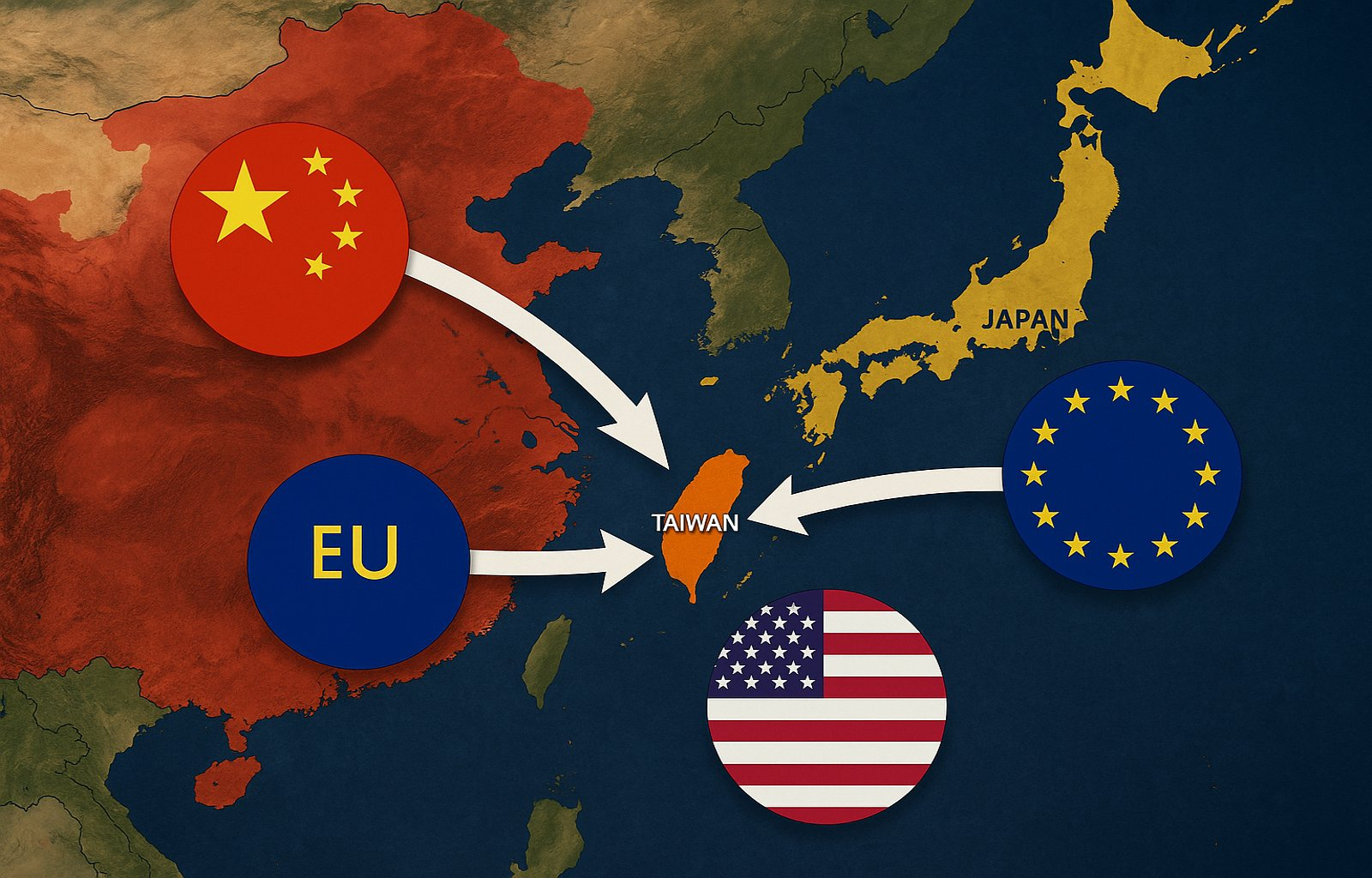
Geopolitical tensions across the Indo-Pacific region reached a fresh flashpoint on Tuesday, May 26, 2026, as Beijing issued a sharp rhetorical rebuke against the Quadrilateral Security Dialogue. Following a high-profile meeting of the Quad foreign ministers—representing Australia, India, Japan, and the United States—the group issued a comprehensive joint statement unveiling sweeping new initiatives aimed at maritime security monitoring, clean energy deployment, and critical Pacific island port infrastructure.
The response from Beijing was immediate and critical. During a regular press briefing at the Ministry of Foreign Affairs, Chinese officials firmly pushed back against the joint declaration, warning that Western-led security groupings risk destabilizing the delicate balance of power in Asia.
The unfolding semantic and strategic battle highlights a deep ideological divide regarding Chinese Foreign Ministry response to Quad foreign ministers’ joint statement guidelines, throwing a spotlight on how superpower rivalries are shaping maritime trade routes in 2026.
The Quad’s Bold New Assertions
To understand the intensity of China’s diplomatic pushback, we must look closely at the specific measures announced by the Quad ministers. Led by figures including U.S. Secretary of State Marco Rubio and Indian External Affairs Minister S. Jaishankar, the alliance stepped away from vague diplomatic platitudes and introduced concrete, operational assets.
The centerpieces of the 2026 joint statement include:
- Integrated Maritime Surveillance: A new initiative designed to fully fuse the surveillance capabilities of all four nations, establishing a real-time, unclassified satellite data-sharing network across the Indo-Pacific.
- Pacific Infrastructure Pivot: A landmark joint development agreement with Fiji to heavily modernize and upgrade local port infrastructure, marking the Quad’s first direct infrastructure project in the Pacific islands to counter regional economic dependencies.
- Supply Chain Safeguards: Hard guidelines aimed at building transparent, secure energy supply corridors that circumvent non-market monopolistic practices.
While the text of the Quad’s joint statement carefully avoided naming China explicitly, the strategic subtext was unmistakable. The focus on monitoring unexpected naval movements and reinforcing island ports directly challenges Beijing’s rapidly expanding presence in the South China Sea and the wider Pacific ocean.
1. Beijing’s Rejection of “Small Circles” and Exclusivity
The official reaction from the Chinese government was delivered by Foreign Ministry Spokesperson Mao Ning in Beijing. Addressing the international press corps on Tuesday, Mao characterized the Quad’s latest initiatives not as defensive safeguards, but as an aggressive mechanism designed to stir up bloc confrontation and containment loops.
Mao emphasized that China views the continuous institutionalization of the Quad as an attempt to impose an exclusive, Cold War-era framework onto a highly integrated modern economy.
The Trust Deficit: “We do not support the creation of exclusive ‘small circles’ or bloc confrontation,” spokesperson Mao Ning stated firmly during the briefing. “Any cooperation between relevant countries should contribute to regional peace, stability, and prosperity, and should not target any third party. The newly announced maritime monitoring initiative risks actively reducing mutual trust and cooperation among regional countries.”
Strategic Stances: The Core Geopolitical Arguments
To visualize the fundamental diplomatic disconnect between the two factions, let us contrast the official positions held by the Quad alliance against the formal counter-arguments deployed by China’s Ministry of Foreign Affairs.
| Geopolitical Dimension | The Quad Alliance Perspective (Joint Statement) | The Chinese Foreign Ministry Rebuttal |
| Maritime Monitoring | A transparent tool for humanitarian aid, disaster response, and curbing illegal fishing. | A provocative military surveillance grid that undermines sovereignty and reduces trust. |
| Regional Architecture | Preserving a free, open, rules-based international order in the Indo-Pacific. | A thinly veiled “containment strategy” modeled on Western military alliances. |
| Pacific Infrastructure | Empowering developing island nations through fair, transparent funding frameworks. | Geopolitical maneuvering disguised as aid to squeeze out legitimate bilateral trade. |
| Economic Security | De-risking critical supply chains from state-directed market manipulation. | Discriminatory trade practices that split the global market and disrupt logistics. |
2. The Battle for the Global South and Institutional Friction
This latest diplomatic dispute occurs at a highly complex moment for regional diplomacy. The timing of the Quad meeting and China’s subsequent pushback coincides with intense maneuvering inside other multilateral organizations, specifically the BRICS grouping.
Just weeks prior, administrative and scheduling bottlenecks prevented high-level Chinese representation at regional ministerial assemblies in New Delhi. This backdrop has accelerated a fierce narrative war over which framework truly represents the interests of developing economies in the Global South.
While India successfully balances its alignment with Western partners in the Quad alongside its active leadership in BRICS, China is pushing a completely different alternative. Beijing is heavily promoting its Global Security Initiative (GSI)—a conceptual architecture that rejects traditional defense partnerships and intelligence-sharing grids in favor of state-centric non-interference models. By slamming the Quad’s maritime surveillance plans as exclusive, Beijing is attempting to position itself to neutral Asian and Pacific nations as the more inclusive, less militaristic superpower partner.
3. The Structural Implications for South China Sea Shipping
Beyond the immediate diplomatic soundbites, maritime security experts note that the real friction lies in the data. The implementation of the Quad’s real-time information network removes the veil of anonymity that previously protected gray-zone maritime tactics.
For years, unregulated commercial vessels and localized maritime militias could operate in disputed shipping channels with relative ambiguity. By pooling satellite sensors and instantly distributing that data to small island nations, the Quad is establishing an unprecedented level of transparency. This structural change is precisely why the Chinese Foreign Ministry’s tone has hardened. The initiative directly limits Beijing’s tactical flexibility in enforcing its expansive territorial claims over vital international shipping lanes, through which trillions of dollars in global commerce flow annually.
A Delicate Balance of Power
The sharp words exchanged between Beijing and the Quad capitals underline the high-stakes chess match defining 2026 international relations. The Chinese Foreign Ministry’s response serves notice that every major deployment of maritime technology or regional infrastructure development will be fiercely contested on the diplomatic stage.
As the Quad moves forward with its physical port upgrades in Fiji and integrates its tracking networks, the challenge will be managing this friction without triggering accidental miscalculations at sea. For the rest of the Indo-Pacific, the objective remains clear but increasingly difficult to achieve: avoiding being forced to choose sides in a deepening rift between a rising regional colossus and a determined network of democratic maritime powers. True regional stability will ultimately depend on transforming this intense strategic competition into a stable, peaceful balance of power.