The suspicious death of 33-year-old former model and actor Twisha Sharma has escalated into a national flashpoint, exposing a bitter legal battle that reaches the highest echelons of the Indian judicial system. What began as an alleged suicide at a residential property in Bhopal’s Katara Hills has rapidly transformed into a high-profile criminal investigation, with the Central Bureau of Investigation (CBI) formally seizing control of the case.
According to shocking new details accessed directly from the newly re-registered CBI FIR, the primary allegations strike at a deeply disturbing moment of the wedding rituals. The central probe agency has documented that Twisha’s mother-in-law, Giribala Singh—a high-profile retired additional district judge—explicitly demanded Rs 2 lakh in cash as additional dowry during the “vidai” (the formal bridal send-off ceremony) following the marriage in December last year.
As a specialized Special Crime Unit from New Delhi arrives on the ground in Madhya Pradesh, the case is highlighting severe procedural systemic scrutiny and drawing direct intervention from the Supreme Court of India.
The Wedding Day Demand and Patterns of Cruelty
To understand how this dynamic unfolded so tragically, investigators have turned back the clock to December 9, 2025—the date Twisha Sharma married her lawyer husband, Samarth Singh. The wedding was intended to mark a fresh, celebratory chapter for the Noida-based actor, but the formal written complaints submit a far darker reality.
The CBI FIR notes that the groom’s family expressed immediate dissatisfaction with the baseline dowry arrangements made by Twisha’s parents. This friction allegedly culminated right at the emotional conclusion of the wedding rituals.
The Vidai Confrontation: The FIR alleges that as the bridal party prepared for the formal departure, Giribala Singh halted proceedings to demand an immediate cash payment of Rs 2 lakh. Yielding to extreme psychological pressure and desperate to ensure their daughter’s future safety, Twisha’s family reportedly scrambled to arrange and pay the amount after repeated, aggressive insistence from the accused.
However, this payment failed to stabilize the marital dynamic. The family’s formal deposition alleges that soon after relocating to Bhopal, Twisha was subjected to a continuous, calculated loop of mental and physical harassment, emotional abuse, and extreme domestic isolation, all systematically leveraged to extract further financial concessions.
Structural Breakdown: The Twisha Sharma Investigation Metrics
The transition from a localized police investigation to a full-scale federal probe has completely altered the legal landscape. Let us look at the primary case metrics, the criminal statutes invoked, and the conflicting claims defining the narrative in late May 2026.

| Case Parameter | Local Police Baseline | Current CBI Case Realities |
| Primary Accused Parties | Samarth Singh (Husband) & Giribala Singh (Mother-in-Law) | Samarth Singh & Giribala Singh (Identical naming maintained) |
| BNS Legal Provisions | Registered under standard domestic cruelty provisions. | Section 80(2) (Dowry Death), Section 85 (Cruelty by Husband/Relatives), Section 3(5) (Common Intention). |
| The Defense Narrative | Claimed the victim suffered from advanced emotional instability and substance dependency. | Categorized as unverified claims requiring independent forensic evaluation. |
| Autopsy Determinations | Preliminary local report noted “antemortem hanging by ligature” with minor blunt force markings. | AIIMS Delhi Panel Autopsy ordered by High Court to scrutinize premortem assault indicators. |
2. A Chronological View of the Escalate Timeline
The investigation has moved with extraordinary velocity following public outrage and family allegations regarding administrative tampering.
1.The Subterranean Discovery:May 12, 2026 — 10:20 PM.
Twisha Sharma is found hanging at her marital home in Bhopal. Her husband brings her body to AIIMS Bhopal, where doctors officially declare her “brought dead” at 12:05 AM on May 13. The in-laws instantly flag it as a tragic suicide, alleging underlying mental health struggles.
2.Asymmetry and Flight:May 13 to May 22, 2026.
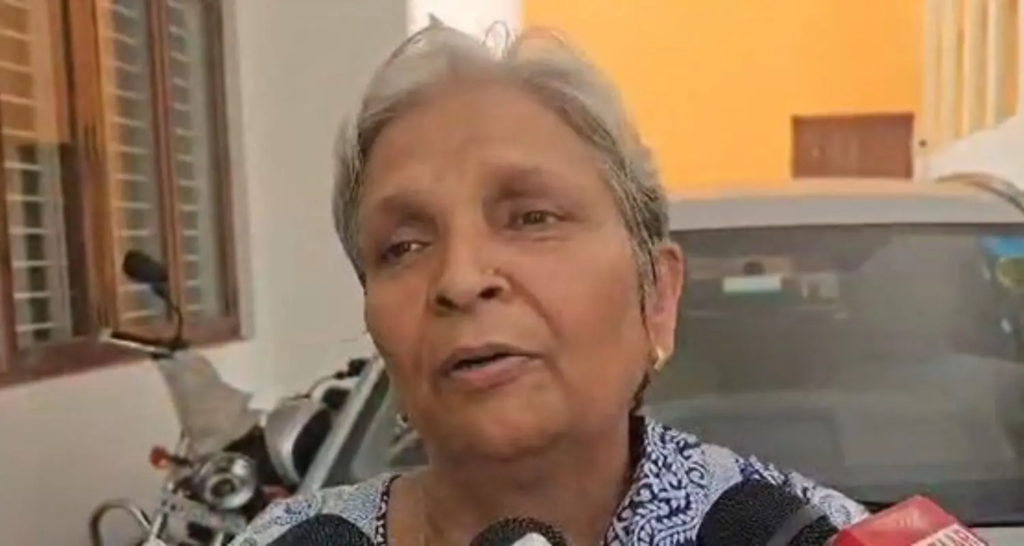
Bhopal Police register an initial FIR on May 15 following statements from Twisha’s grieving parents. Meanwhile, the husband, Samarth Singh, goes completely missing, evading tracking networks for nearly ten days. The family demands an audit into Giribala Singh’s immediate calls to sitting judges and technicians regarding “CCTV maintenance errors.”
3.Supreme Court Intervention:May 23 to May 25, 2026.
The Madhya Pradesh government formally proposes a CBI transfer. Simultaneously, the Supreme Court of India takes suo motu cognisance of the matter. Led by Chief Justice Surya Kant, the bench bars the airing of defensive media interviews by the accused, citing potential prejudice to an active criminal conspiracy probe.
4.Federal Teams on the Ground:May 26, 2026 — Present.
The CBI officially re-registers the case under federal protocols. A specialized Special Crime Unit, including expert female personnel, physically arrives at Giribala Singh’s Katara Hills residence to secure physical evidence, verify the state of the digital CCTV hard drives, and reconstruct the scene.
3. The Evidence Tampering Angle: The CCTV Controversy
A central pillar of the CBI’s active investigation focuses on whether critical digital footprints were systematically destroyed in the hours immediately following Twisha’s death.
Twisha’s family raised serious alarms after discovering that the retired judge had reportedly established rapid, high-level communications with local administration officials, sitting judicial officers, and a private security company managing the estate’s surveillance network before her parents were fully briefed on their daughter’s demise.
Giribala Singh informed a First Class Judicial Magistrate that the eight CCTV cameras installed on her residential property were experiencing “technical maintenance errors” handled by an external vendor. The victim’s family has aggressively challenged this narrative, calling it a deliberate attempt to sanitize the crime scene. The CBI’s technical cyber forensics division is currently analyzing the server logs of the surveillance drives to determine if any recording gaps match the timeline of the assault.
The Medical Wildcard: While the primary postmortem confirmed the death was technically due to hanging, the discovery of multiple distinct, blunt-force injury marks across other zones of Twisha’s body has completely complicated the suicide theory. The findings prompted the Madhya Pradesh High Court to mandate a comprehensive secondary autopsy by a four-member expert medical board flown in from AIIMS Delhi, which will definitively establish whether physical violence occurred prior to the hanging.
The Road Ahead: A Test for the Rule of Law
The high-profile status of the accused—a retired member of the state judiciary and a practicing lawyer—has turned the Twisha Sharma death case into a profound test of public confidence in the equality of the Indian legal framework.
As the Supreme Court observed during its suo motu proceedings, the gravity of the case demands a completely insulated, thorough, and aggressive investigation, entirely free from local institutional influence. By deploying a specialized federal team, reconstructing the timeline of the Rs 2 lakh vidai demand, and verifying the forensic evidence surrounding the physical injuries, the CBI is moving to ensure that the search for the absolute truth proceeds unimpeded. For a grieving family left searching for answers, the intervention of the central agency represents the first concrete step toward securing true judicial accountability for their daughter.