The “Golden Age” of affordable consumer virtual reality (VR) just hit a significant speed bump. In a move that has sent ripples through the tech community today, April 17, 2026, Meta has officially announced a price correction across its entire hardware portfolio. As Meta raises Quest headset prices, the industry is forced to confront a harsh new reality: the insatiable demand for artificial intelligence is making the physical components of our favorite gadgets more expensive than ever before.
For years, Mark Zuckerberg’s strategy was clear—subsidize the hardware to get a headset into every home. However, the 2026 global semiconductor climate, dominated by the needs of high-level AI processing, has made that “software-defined” subsidization model unsustainable. Whether you are a casual gamer or a professional using Quest for productivity, the cost of entry into the metaverse just went up.
The Memory Crisis: Why Meta Raises Quest Headset Prices
The primary culprit behind this price hike isn’t corporate greed; it’s the global memory market. In 2026, the surge in generative AI applications has created a massive shortage of high-bandwidth memory (HBM) and specialized DRAM.
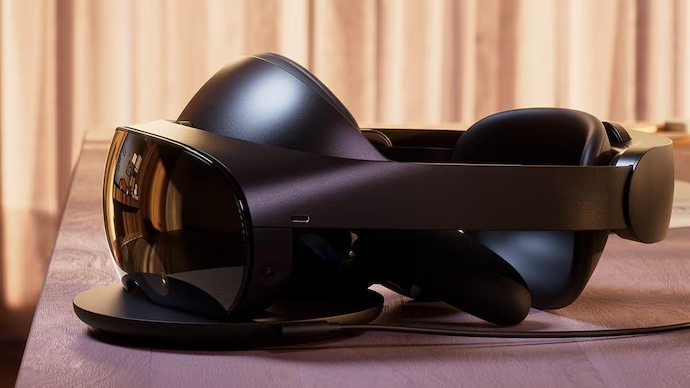
Because modern VR units rely on high-performance memory to render “software-defined” environments without latency, Meta is competing with AI server giants for the same silicon. Consequently, Meta raises Quest headset prices to offset a nearly 40% increase in component procurement costs. As the cost of manufacturing a Quest 3 or the upcoming Quest 4 climbs, Meta can no longer swallow the loss without threatening its long-term R&D for the “Reality Labs” division.
2026 Pricing Breakdown: The New Cost of VR
Effective immediately, the retail “vibe” for Meta hardware has shifted. According to the official statement from Menlo Park, the price adjustments are as follows:
- Meta Quest 3 (128GB): Moving from $499 to $549.
- Meta Quest 3 (512GB): Moving from $649 to $699.
- Meta Quest Pro 2 (Early Access): Seeing a projected increase of $100 on pre-order estimates.
While a $50 increase might seem manageable, it represents a psychological barrier for many first-time buyers. The fact that Meta raises Quest headset prices during a year when Apple and Sony were expected to lower theirs creates a unique competitive vacuum in the market.
The AI Hardware Paradox
It is ironic that the very technology Meta is championing—artificial intelligence—is the one making their hardware more expensive. In 2026, Meta’s Quest headsets are more than just gaming goggles; they are AI-driven spatial computers.

The onboard processors now handle real-time AI translation, environmental mapping, and “software-defined” hand tracking that requires immense computational power and, more importantly, high-speed memory. When Meta raises Quest headset prices, they are effectively passing on the “AI tax” to the consumer. The more intelligent our headsets become, the more expensive the “brain” of the device becomes to manufacture.
[Image Suggestion: A high-tech teardown of a Quest headset highlighting the memory chips and AI processor]
Consumer Reaction: Will the Metaverse Stall?
In tech forums and on social media, the reaction has been mixed. Enthusiasts understand the supply chain issues, but the general public is feeling “hardware fatigue.”
Despite the news that Meta raises Quest headset prices, the company maintains that its headsets remain the best value on the market. When compared to the $3,000+ price point of the Apple Vision Pro, Meta’s “corrected” prices still feel accessible. However, the secondary market for used Quest 2 and Quest 3 units is expected to explode as budget-conscious gamers look for a way around the price hike.
Future Outlook: Impact on Meta Quest 4
The biggest question on everyone’s mind concerns the next generation. If Meta raises Quest headset prices now, what does this mean for the Meta Quest 4 launch scheduled for late 2026?
Industry analysts suggest that Meta may introduce a “modular” approach for the Quest 4—selling a base unit with lower memory and offering “software-defined” upgrades or external storage solutions. This would allow them to keep the “starting at” price low while still accounting for the soaring costs of high-capacity memory modules.
Strategizing for the Price Hike
If you were on the fence about buying a headset, the news that Meta raises Quest headset prices suggests you should act quickly before retail stock from old shipments runs out. Many third-party retailers like Amazon and Best Buy still have stock at 2025 prices, but these are expected to be updated within the next 48 hours.
A New Era of Premium VR
Today’s announcement that Meta raises Quest headset prices marks the end of the “budget VR” era. As AI continues to cannibalize the global supply of memory and processors, hardware prices across the board—from laptops to headsets—will likely continue to rise.
Meta is betting that their “software-defined” ecosystem and superior library of games will keep users loyal, even at a higher price point. As we move further into 2026, the “vibe” of the VR industry is shifting from mass-market toy to high-end essential tech. Whether the market follows them into this premium future remains to be seen.
Frequently Asked Questions (FAQs):
Exactly how much did Meta raise Quest headset prices?
As of April 17, 2026, Meta has increased the price of the Quest 3 series by approximately $50 per unit, citing increased costs in the global memory and AI-silicon supply chain.
Is the Meta Quest 2 affected by the price hike?
Most retailers have already discontinued the Quest 2 in favor of the Quest 3S. However, while Meta hasn’t officially raised the price of the older units, the news that Meta raises Quest headset prices has led to a slight increase in the price of refurbished and used units in the second-hand market.
Will prices go back down if memory costs decrease?
Historically, once Meta raises Quest headset prices, they rarely return to previous levels unless a new model is launched. Instead of lowering prices, Meta usually adds “software-defined” value through feature updates and bundled content.