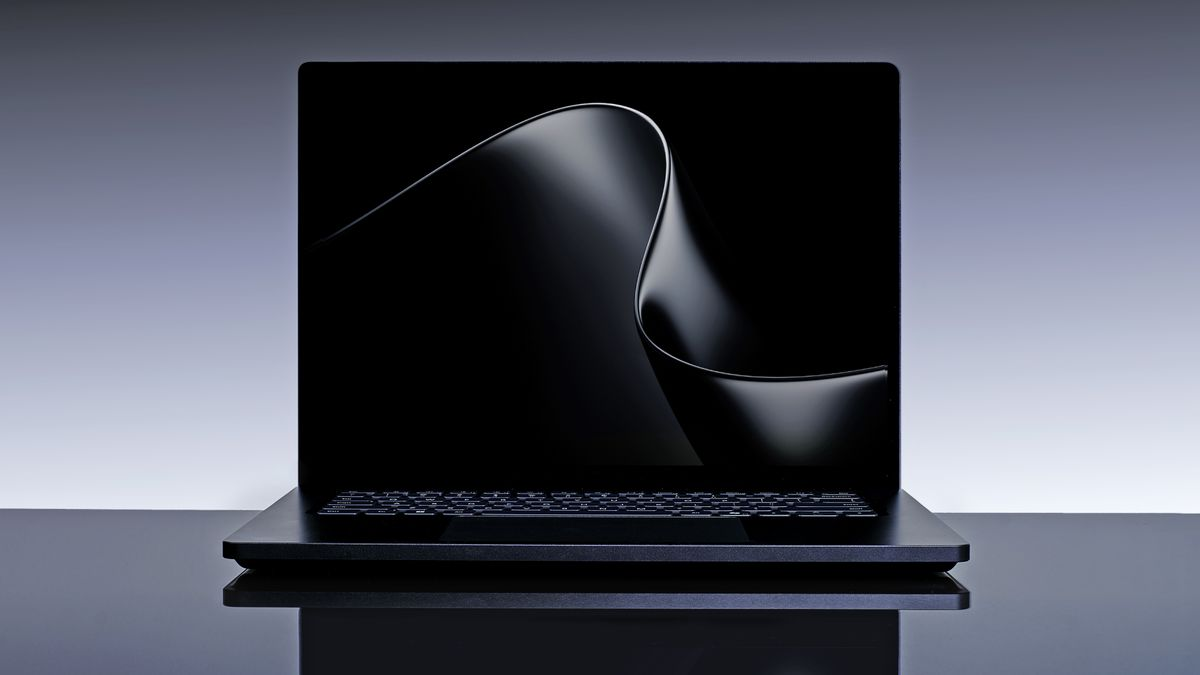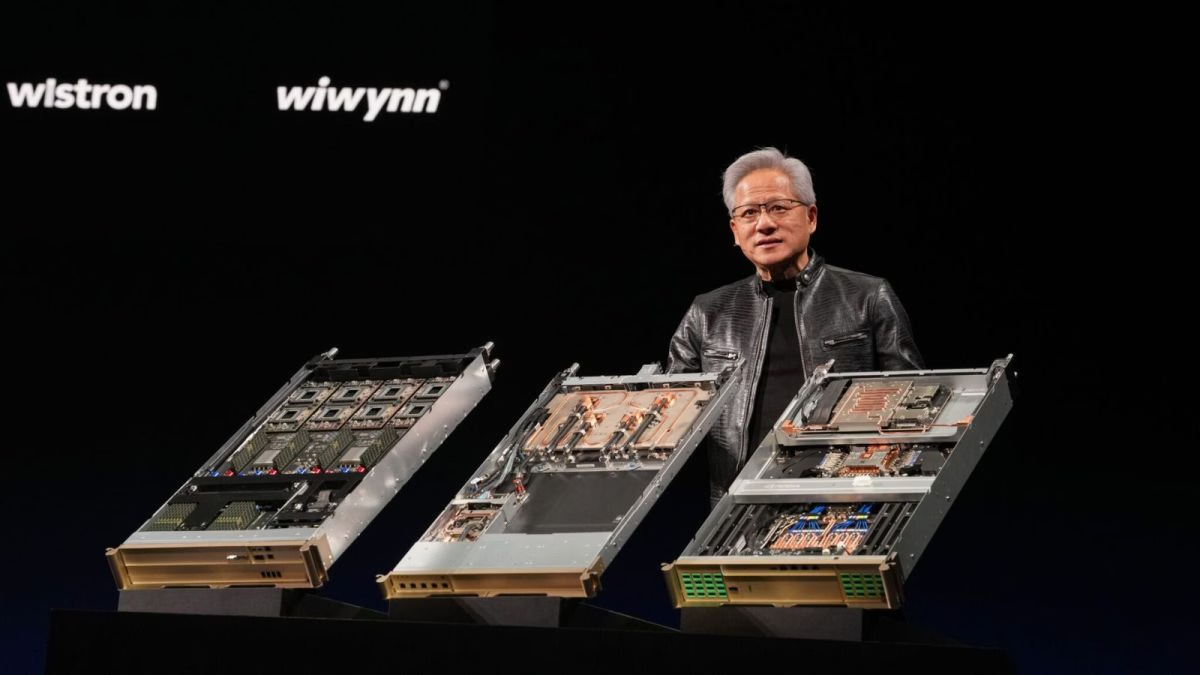
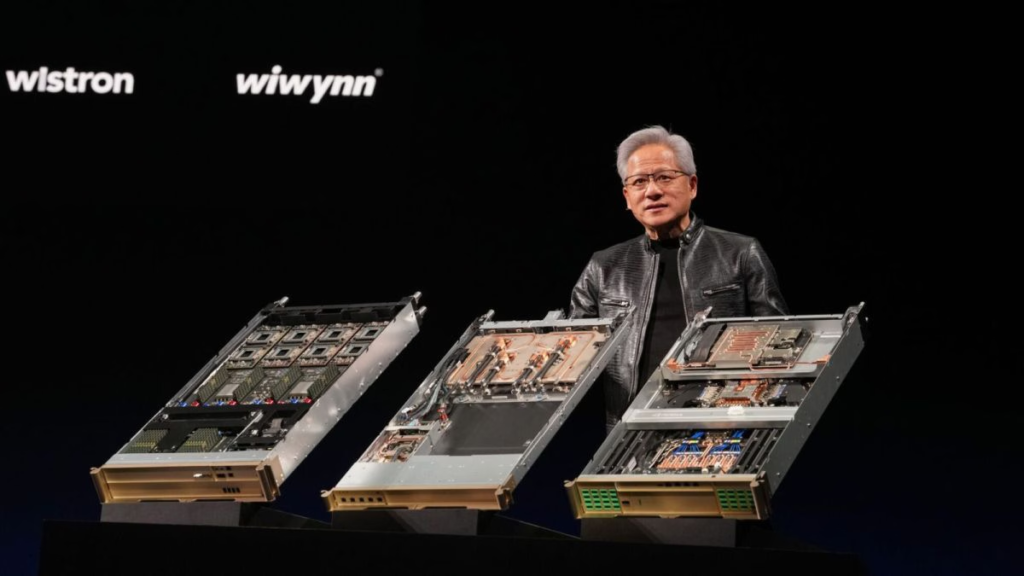
A massive hardware transformation is hitting the computer industry, moving our devices from simple tools into active teammates. At Computex 2026 in Taipei, NVIDIA and Microsoft officially announced a landmark partnership to launch a new generation of Windows PCs purpose-built for personal agents.
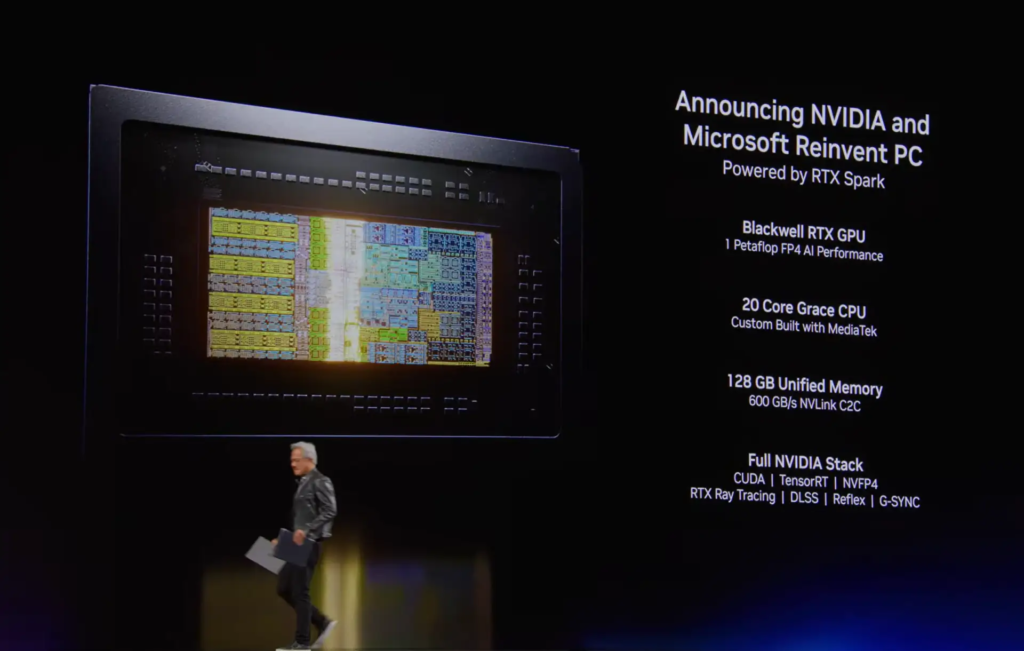
Powered by NVIDIA’s newly unveiled RTX Spark™ superchip, this platform marks the graphics giant’s formal entry into the primary PC processor market. It is engineered from the ground up to challenge Apple, Intel, and AMD. Rather than relying on cloud data centers to process machine learning prompts, these machines bring frontier-class artificial intelligence capabilities directly onto your physical desk, running highly complex multi-step tasks locally, securely, and completely offline.
Under the Hood: The Grace Blackwell RTX Spark Superchip
The computational muscle behind these upcoming agent-focused PCs is a powerhouse system-on-chip (SoC) manufactured on TSMC’s advanced 3-nanometer process node.
The superchip combines a custom 20-core Arm-based NVIDIA Grace CPU (co-developed in close partnership with MediaTek) and an extraordinary Blackwell-architecture RTX GPU packing 6,144 CUDA cores.
By binding these two processing systems together across a lightning-fast NVLink-C2C chip-to-chip interconnect, the processor shares up to 128GB of high-speed unified LPDDR5X memory. This setup unlocks an unprecedented 1 petaflop of local AI performance, enabling thin laptops and compact desktops to comfortably run massive 120-billion-parameter Large Language Models (LLMs) with massive context windows stretching up to 1 million tokens.
Comprehensive Feature Matrix: Next-Gen Agent PCs vs. Legacy AI PCs
To help consumers understand what makes these systems unique, it helps to look at the massive architectural upgrades separating this platform from previous laptop generations.
The comparison table below details the performance capabilities coming to retail shelves:
| Performance Metric Category | Standard AI PC Layouts | Purpose-Built Agent PC Systems | Professional User Workflow Advantage |
|---|---|---|---|
| Peak AI Computational Power | Traditional NPU scaling between 40 and 50 TOPS | 1 Petaflop of continuous AI processing | Instantaneous local reasoning without cloud subscription delay |
| Silicon Architecture | Traditional x86 or initial basic Arm layouts | Custom NVIDIA Grace CPU + Blackwell RTX GPU Superchip | Outstanding power efficiency enabling ultra-thin 14mm laptop chassis design |
| System Memory Access | Fragmented system RAM split away from VRAM pools | Up to 128GB Unified Memory architecture | Seamless handling of massive 90GB+ 3D rendering scenes or local frontier LLMs |
| Creative Software Speeds | Standard GPU hardware-accelerated filters | Fully rearchitected Adobe pipelines (Photoshop & Premiere) | Up to 2x faster performance across live AI tools, color tracking, and editing |
| Premium Gaming Class | Integrated graphics limited to 1080p medium textures | Integrated Blackwell core (roughly equal to an RTX 5070 GPU) | Smooth 1440p gaming scaling past 100 FPS via DLSS 4.5 Ray Reconstruction |
Dual-Layer Safety Sandbox: Keeping Your Data Private
Running highly capable AI agents that can read emails, manage local file systems, and execute cross-app workflows requires tight digital protection. To make sure these automated helpers never compromise user privacy, Microsoft and NVIDIA have built a comprehensive, hardware-backed Shared Security System.
1. Windows OS-Level Primitives
Microsoft is integrating advanced security layers directly into the core Windows kernel. These boundaries provide strict process isolation, ongoing cryptographic identity verification, and rigid policy enforcement. This ensures that an active background agent cannot be manipulated or hijacked by malicious online software scripts.
2. NVIDIA OpenShell Runtime
Operating as a defensive perimeter between the AI agent and your personal workspace, OpenShell gives users granular control over exactly what data their digital assistant can access. Users can decide exactly when a query is allowed to use local processing power, whitelist specific folders, and automatically scrub sensitive personal info before any cloud queries are processed.
Step-by-Step Guide: Launching Local Agents Safely via OpenShell
Developers and creators can easily set up and isolate a local assistant profile directly from the Windows taskbar:
1.Initialize the OpenShell Hub:System Integration.
Click the unified AI icon positioned on the Windows taskbar to launch the secure OpenShell dashboard interface.
2.Configure App Permission Rules:Access Controls.
Use the permission toggles to select exactly which Windows applications—such as Outlook, Excel, or local code repositories—the agent is allowed to interact with.
3.Activate Token Scrubbing Filters:Data Protection.
Turn on the real-time data masking filter. This automatically hides account credentials, billing details, and private identification strings from the local model’s processing view.
4.Deploy the Offline Agent Pipeline:Local Launch.
Select your preferred local open-source model (such as a Llama-3 derivative) and launch the assistant. Your private, offline co-pilot is now ready to automate multi-step workflows.
Ecosystem Rollout Schedule: The initial wave of slim laptops and ultra-efficient compact desktops powered by the RTX Spark superchip will hit retail channels this fall. Initial hardware models will launch from premier manufacturing partners including Microsoft Surface, ASUS, Dell, HP, Lenovo, and MSI, with secondary deployments from Acer and GIGABYTE scheduled to follow closely behind.