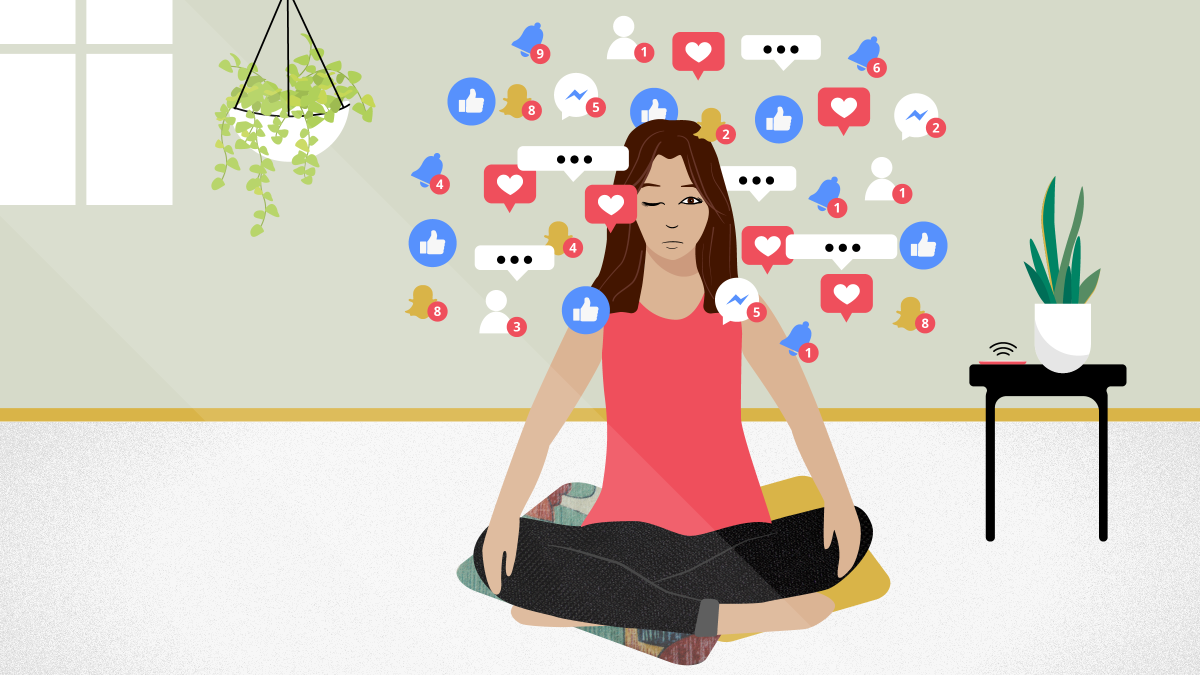
The smartphone has become a literal extension of the human hand. We wake up and instantly check our notifications before our eyes can even fully adjust to the morning light. We scroll through short-form video feeds while waiting for an elevator, swipe through photo carousels during lunch, and fall asleep to the hypnotic glow of algorithmic feeds. This frictionless, constant stream of information has fundamentally altered how our brains process reality.
The average person now spends upwards of two and a half hours every single day across various networking platforms. While these apps promise to keep us hyper-connected, they operate like digital slot machines, constantly demanding our attention in exchange for microscopic hits of validation.
But what if you pulled the plug? What if you decided to step away from the endless cycle of likes, comments, retweets, and shares for just one week? If you are feeling chronically exhausted, distracted, or anxious, exploring exactly what happens if you stop using social media for 7 days can serve as an eye-opening roadmap to reclaiming your cognitive independence. Let’s break down the scientific, neurological, and physiological timeline of a seven-day digital fast.
The Neurochemical Shift: Rebalancing the Brain
To understand why a short break triggers such massive internal changes, we must look at the neurochemical infrastructure of addiction. Social networks are meticulously engineered by behavioral psychologists to hijack your brain’s dopamine pathways. Every time you see a red notification badge or receive a fresh comment, your brain experiences an unearned spike in dopamine—the neurotransmitter responsible for reward and motivation.
When you abruptly cut off this source of cheap stimulation, your brain goes through a profound recalibration process.
To visualize how your internal biology shifts when you step away from the digital noise, look at the comprehensive metric breakdown below.
Biological Impact Analysis
| Behavioral Marker | The Hyper-Connected Brain (Daily Scrolling) | The Detoxed Brain (Post 7-Days Offline) |
| Dopamine Baseline | Desensitized and erratic; requires constant novel stimuli to feel satisfied. | Stabilized; everyday activities like reading or walking become genuinely rewarding. |
| Salivary Cortisol | Elevated due to continuous news alerts and subconscious social comparison. | Drastically reduced, leading to lower systemic anxiety and physical relaxation. |
| Attention Span | Fragmented; dynamic cognitive shifting limits deep-focus capacity to minutes. | Expanded; the prefrontal cortex regains the ability to engage in sustained deep work. |
| Sleep Architecture | Fragmented REM cycles caused by late-night blue light and cognitive stimulation. | Deepened slow-wave and REM sleep, maximizing cellular and neural recovery. |
Chronological Journey: The 7-Day Timeline
Stepping away from your favorite apps isn’t an immediate walk in the park. It is a psychological progression that moves from intense withdrawal to absolute clarity.
1.Phase 1: The Phantom Vibration Syndrome:Duration: Hours 1 to 48.
The initial 48 hours are undeniably the most difficult. Because your brain has been conditioned to reach for your phone during any pocket of downtime, you will experience a profound sense of boredom and restlessness. Many individuals report “Phantom Vibration Syndrome”—falsely believing their phone is buzzing in their pocket when it isn’t even in the room. This is your habit loop actively rebelling against the lack of cheap dopamine.
2.Phase 2: The Attention Rebound:Duration: Hours 49 to 96.
By day three and four, the compulsive urge to check your phone begins to subside. As the constant background noise of the internet fades, a remarkable shift occurs: your attention span expands. You will find yourself finishing articles without getting distracted, listening to conversations with genuine presence, and experiencing bursts of creative thought. Boredom forces your brain into the “default mode network,” which is the breeding ground for true creativity and self-reflection.
3.Phase 3: The Baseline Stabilization:Duration: Hours 97 to 168.
As you approach the final days of the week, your emotional landscape stabilizes. The subconscious anxiety driven by “FOMO” (Fear Of Missing Out) completely evaporates. You stop evaluating your life against the manicured highlight reels of acquaintances and influencers. Your sleep quality sky-rockets because your brain isn’t being flooded with artificial blue light and high-alert information right before bed, leaving you feeling profoundly rested each morning.
3. Breaking Free from the “Comparison Trap”
A massive component of what happens if you stop using social media for 7 days involves your emotional well-being. Humans are evolutionary wired to look at their peers to gauge their own social standing. On social networks, however, you aren’t comparing yourself to your real neighbors; you are comparing your messy, behind-the-scenes reality to everyone else’s polished, edited, and curated best moments.
The Psychological Reality: This continuous, subconscious social comparison forces the brain into a low-grade, persistent state of inadequacy. When you step away from the feed for seven days, you stop consuming this artificial metric of success. Your internal dialogue shifts away from what you lack and settles into gratitude for what you currently have. You return to living your life for the actual experience, rather than living it for the sake of capturing content for an audience.
4. Reclaiming Your Time Asset
Let’s do some simple math. If you save two hours a day by avoiding social feeds, a 7-day fast hands you back an astonishing 14 hours of waking time. That is the equivalent of an entire extra waking day added to your week.
Most people claim they don’t have time to exercise, cook healthy meals, read books, or learn a new instrument. Yet, the time was always there, quietly buried inside the infinite scroll. Reclaiming those hours allows you to reinvest your mental energy into real-world habits that build true, long-term fulfillment rather than temporary digital validation.
Designing a Sustainable Digital Blueprint
A seven-day digital fast is not about demonizing technology or swearing off the internet forever. We live in a connected world, and these platforms serve legitimate purposes for communication, career networking, and community building.
Rather, the purpose of exploring what happens if you stop using social media for 7 days is to run a controlled experiment on your own mind. It allows you to break the unconscious dependency and reset your neurochemical baseline. When the week ends and you choose to log back in, you do so not as an impulsive slave to the algorithm, but as an intentional, mindful user.
Moving forward, consider implementing simple boundaries: turn off non-essential notifications, institute a strict no-phone rule at the dinner table, or keep your Sundays entirely analog. By taking control of your digital environment, you ensure that technology remains a tool that enhances your life, rather than a distraction that consumes it. Step away from the screen, embrace the real world, and give your mind the quiet space it truly deserves.