When you purchase a premium smartphone from an established global manufacturer, you are paying for more than just physical cameras, glass backing, and high-frequency display panels. You are paying for a secure, uncompromised, and trustworthy software environment. You operating under the logical assumption that your device acts as a neutral gateway to the web, safely carrying your inputs without monitoring or tampering with your daily data paths.
However, a bizarre discovery in May 2026 has completely shattered that assumption for a segment of the Android community.
A technical investigation has revealed that certain modern devices are quietly intercepting standard e-commerce links. According to widespread reports, software components are running in the background so that your motorola phone might secretly monetizing your amazon clicks. By routing your shopping requests through hidden third-party traffic tunnels and injecting tracking markers, the device is turning your standard shopping habits into an unapproved corporate revenue stream.
Let us dive deep into the technical mechanics of this affiliate hijacking incident, explore the specific application responsible for the rerouting, and outline the immediate steps you can take to secure your smartphone.
1. The Discovery: Tracking the Invisible Redirect
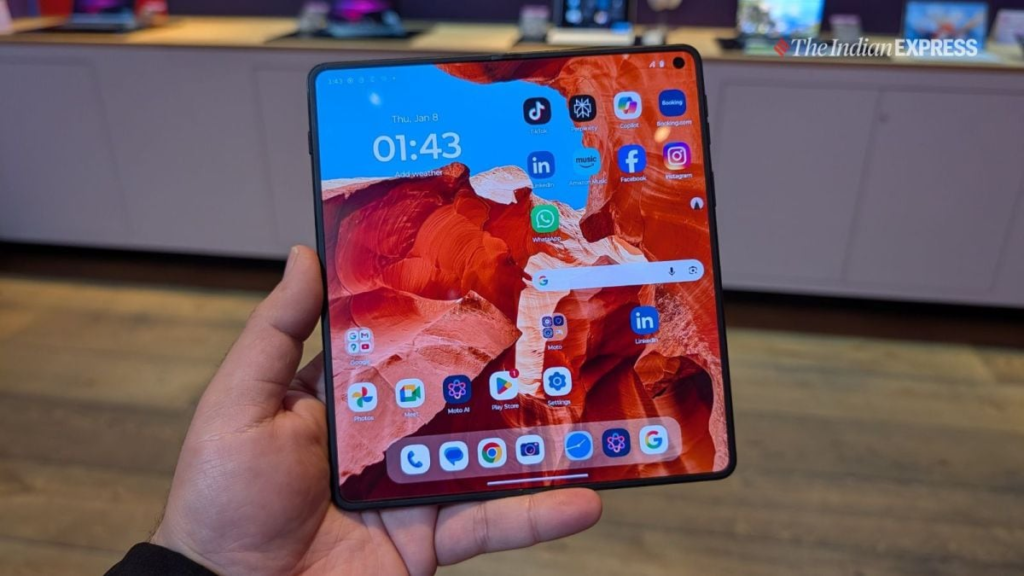
The security anomaly was initially flag-posted by an observant technology enthusiast on Reddit (username u/Trypocopris) who noticed a subtle, multi-second lag when attempting to open standard shopping links on his premium Motorola Razr 60 Ultra.
Normally, clicking a product link inside a mobile browser instantly activates Android’s “Intent Filters,” seamlessly launching the native Amazon shopping application. Instead, the user observed his device executing a rapid sequence of browser-style window jumps.
+-----------------------------------------------------------------+
|               THE SECRET AFFILIATE REDIRECT LOOP                |
+-----------------------------------------------------------------+
|  1. USER CLICKS LINK -> Target: standard product URL            |
|  2. INTERCEPTION      -> Smart Feed background process triggers  |
|  3. TRAFFIC ROUTING   -> Sent through devicenative.com servers   |
|  4. APPARITION        -> Injects external influencer tag        |
|  5. FINAL DESTINATION -> Launches Amazon App with tracking code |
+-----------------------------------------------------------------+
By connecting his phone to network monitoring software, the user exposed a hidden data loop. Before launching the shopping app, his phone was silently sending data packets to an external advertising domain: devicenative.com.
Within a fraction of a second, this tracking node attached a functioning affiliate code to the URL string before passing the modified request back to the local device. Because this entire transaction happens seamlessly behind the scenes in a matter of milliseconds, the average user would continue their shopping experience completely unaware that their session had been hijacked for profit.
2. Isolating the Culprit: The Smart Feed Update
As media outlets like Android Police and 9to5Google conducted deeper code reviews to verify the user’s claims, the investigation isolated the exact software component causing the malicious behavior: a preloaded system application called Smart Feed.
Smart Feed is a proprietary content-discovery panel built directly into Motorola’s custom Android interface, designed to show news cards, local weather forecasts, and personalized advertising banners when you swipe to the far left of your home screen. While the app is technically a native system utility, it is deeply integrated with third-party advertising networks to generate digital ad revenue.
The code analysis revealed that a recent system update—specifically Smart Feed version 2.03.0070—introduced the background tracking behavior.
The application actively monitors the system clipboard and hyperlink activity. The moment it flags an outbound web request addressed to an e-commerce platform, it overrides standard system handling protocols, forcing the web request to route through Device Native’s “on-device mobile advertising” monetization servers.
System Architecture Impact: Normal vs. Intercepted Activity
To see the stark contrast between standard operating procedures and this newly exposed tracking method, look at how data behaves across different device states.
| Behavioral Phase | Clean Android Baseline | Intercepted Smart Feed Environment |
|---|---|---|
| Link Activation | Handled natively by the operating system core. | Monitored and intercepted by a background system app loop. |
| Data Privacy | Links travel directly from the origin webpage to the destination retailer. | Shared with third-party tracking domains (devicenative.com) mid-transit. |
| URL Formatting | Clean, direct URL strings matching the clicked product page. | Heavily modified strings containing third-party tracking tags and affiliate codes. |
| System Latency | Instant, zero-overhead execution. | Detectable 1 to 3-second processing delay while generating external redirects. |
3. The Influencer Mystery: Who Is Getting Paid?
The most confusing twist in this unfolding story relates to the actual affiliate tracking tags being injected into user devices.
When a technology firm or app developer utilizes affiliate codes, they typically append their own corporate tracking ID to ensure they receive a direct percentage payout from the retailer for driving the purchase traffic. However, tracking audits on the intercepted Motorola links revealed that the injected IDs do not point to Motorola or Lenovo corporate accounts.
Instead, the tracking tags map back to the public affiliate profile of a prominent digital fashion influencer.
The Spoofing Theory: This bizarre detail suggests two distinct possibilities. Either Motorola has entered into a highly unconventional, opaque revenue-sharing partnership with independent content creators, or the Smart Feed application itself has been severely compromised by a malicious actor. Cybercriminals frequently compromise legitimate ad-tech SDKs (Software Development Kits) to swap out corporate tracking IDs for their own, allowing them to siphon off millions of dollars in retail commissions through a tactic known as “affiliate stuffing.”
4. Immediate Remediation: How to Protect Your Device
Because Motorola has not yet deployed an official, system-wide hotfix to strip the tracking code from the Smart Feed system, the burden of protection falls squarely on the consumer.
If you own a modern Motorola smartphone and want to ensure your digital shopping habits remain private and untampered with, execute this step-by-step optimization sequence immediately.
1.Locate Your System Application Manager:System App Configuration.
Open your phone’s primary Settings menu and select the “Apps” or “Application Management” sub-tab. Because Smart Feed is integrated into the native system launcher package, you may need to click the three vertical dots in the upper-right corner of the screen and toggle on “Show System Apps.”
2.Force Stop and Disable Smart Feed:Neutralizing the Threat.
Scroll through your application alphabetized ledger until you locate Smart Feed. Tap on the application entry, select “Force Stop” to kill any active memory processes, and then click “Disable.” Disabling the application prevents it from executing automated startup routines when your device reboots.
3.Wipe Local Storage and Cache Blocks:Clearing Residual Data.
While still within the Smart Feed app settings panel, navigate to the “Storage & Cache” sub-directory. Click “Clear Cache” followed immediately by “Clear Storage” (or Clear Data) to completely erase any residual tracking logs or configuration files stored locally on your hard drive.
4.Shift Default Browser Context:Alternative Prevention.
As an additional layer of defense, consider changing your default mobile browser to an option focused strictly on privacy, such as Brave or Firefox Focus. These browsers feature built-in script blockers that automatically drop background tracker calls to domains like devicenative.com, rendering link injection tactics entirely useless.
The Hidden Cost of Budget Hardware
The revelation that your motorola phone might secretly monetizing your amazon clicks highlights a widening transparency gap in modern mobile software design. As component manufacturing pricing, advanced display costs, and processing silicon become increasingly expensive, some hardware manufacturers are clearly looking for alternative ways to subsidize their profit margins through hidden software monetization streams.
While injecting an affiliate code may seem like a victimless crime since it does not actively inflate the price you pay at the checkout counter, it represents a flagrant violation of user privacy and basic system trust. It treats the consumer not as an owner of a premium product, but as a digital resource to be continuously mined for advertising micro-transactions.
Until Motorola addresses this issue transparently, drops the tracking scripts, and clarifies whether this behavior is an intentional monetization strategy or a severe third-party security breach, disabling the Smart Feed ecosystem is your absolute best path toward preserving your digital autonomy. Keep a close eye on your system update logs and shop securely.