Since the first wave of large language models, the world has changed in fundamental ways. By the time we reach April 2026, someone asking “What is AI?” can no longer be referring to a simple tool that humans use occasionally. Instead, the question refers to the intelligent “software-defined” underlayer that sits beneath and informs most human interaction—from driving a car to diagnosing a disease.
Artificial Intelligence (AI), as of 2026, is defined as the ability of a non-biological system to carry out human-like cognitive tasks such as judgment, logic, and unmonitored decision-making. However, the vibe of AI today is different and has gone beyond generative (generating content) into agentic (executing actions). To understand what AI is fully, it is necessary to see its transition from an app-driven generative novelty into a “software-defined” necessity.
1. The Core Mechanics: How AI Thinks
To answer, what is AI at a technical level? We have to look at neural networks. These are “software-defined” architectures based on the human brain. In 2026, these networks will have been running on localized hardware (on-device AI) instead of huge, remote server farms (ibid.).
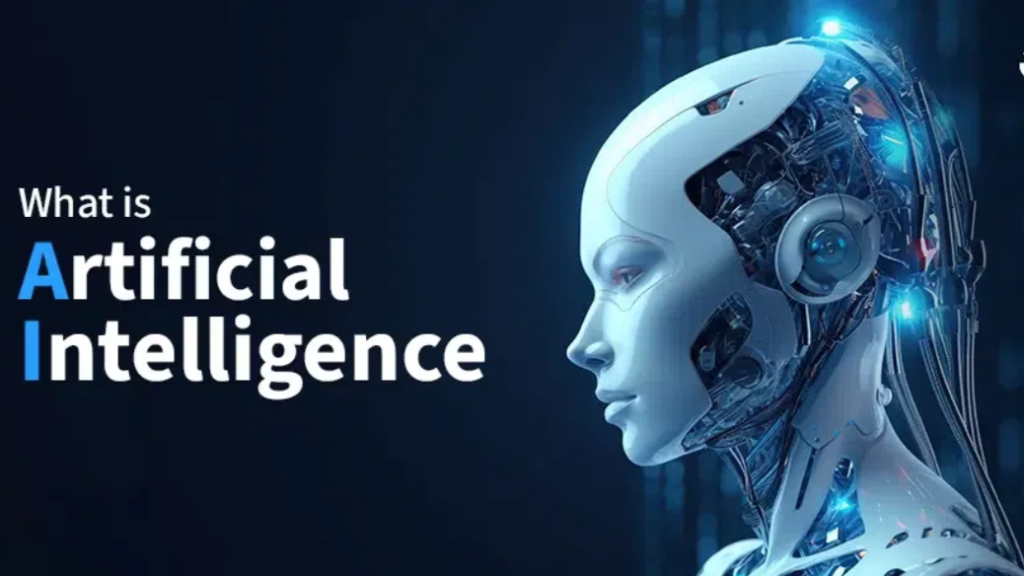
- Machine Learning (ML): The foundation of AI where systems learn from data patterns without explicit programming.
- Neural Networks: Layers of algorithms that process information, allowing the AI to understand “vibe,” context, and nuance.
- Deep Learning: The advanced subset of ML that enables complex tasks like real-time language translation and autonomous driving.
2. From Generative to Agentic: The 2026 Shift
If you asked, “What is AI?” in 2023, the answer was ChatGPT. In 2026, the answer is Agents. We have now moved to the Agentic Workflows era. In other words, AI in 2026 can act, unlike its initial versions, which could only offer answers to questions. It can book flights, manage calendars, or negotiate electricity bills. It is the most significant advancement in the evolutionary timeline of the technology. The programs do not just spit out text; they arrive at solutions in a multi-step, reasoned chain.
3. The “Software-Defined” Impact on Industries
Understanding what AI is requires seeing it in motion. Its impact is visible in every sector of the Indian and global economy in 2026.
Healthcare: The Personal Physician
AI now helps doctors by analyzing “software-defined” biometrics from wearables in real time. It can predict a cardiac event a few days ahead of time. AI is not just a complex database anymore but a vigilant personality safeguarding health.
Education: The Universal Tutor
By 2026, the “vibe” of the classroom has changed. Every student is provided with their own curriculum by AI (ibid, n.d.). If a child’s preferred learning style is visual stories, then the AI “Software-Defined” engine rewrites the textbook accordingly in real time.
Creative Arts: The Collaborative Partner
The debate on the question of whether AI is going to replace artists has shifted. The debate over whether AI will replace artists has shifted. Filmmakers use AI to render complex scenes, and musicians use it to find new sonic “vibes” that no one had options to synthesize before.
4. Emotional AI: Sensing the Human “Vibe”
Affective computing is a significant development in 2026. When we are asking, “What is AI today?” we are talking about systems that can sense human emotion. AI can now read emotions from micro-expressions and the tone of your voice and determine whether you are frustrated, tired, or happy. This “software-defined” empathy is being deployed in customer services and mental health applications for more “human” support, where the client feels like they are interacting with another human being rather than a machine.
5. The Ethics of “What is AI?”
The statement “With great power comes the need for ‘software-defined’ guardrails.” AI ethics conversations in 2026 focus on three pillars, namely:
- Transparency: Knowing when you are talking to an AI agent versus a human.
- Bias Mitigation: Ensuring “software-defined” algorithms don’t replicate human prejudices.
- Data Sovereignty: Keeping your personal “vibe” and data private from the models that train on them.
6. The Future: AGI and Beyond
The final frontier of the “What is AI?” journey lies in Artificial General Intelligence (AGI). The idea that there is a definite limit between human intelligence and machine intelligence is now more and more robotized (modified). In 2026, humans live in a co-pilot world where mundane tasks are surrendered to AI so that the human mind can focus on the “vibe” of creativity and connection.
Embracing the Intelligent Era
So, what is AI? It is the most monumental “software-defined” shift in the course of human history. It is a tool, a partner, and a reflection of intelligence. As 2026 goes further into action, the idea is not to fear the machine but to master the “vibe” of collaboration.
AI is no longer a futuristic concept; it is the current reality. By understanding its mechanics and potential, we can build a future that is smarter, more efficient, and more human.
Frequently Asked Questions (FAQs):
What is AI in simple terms?
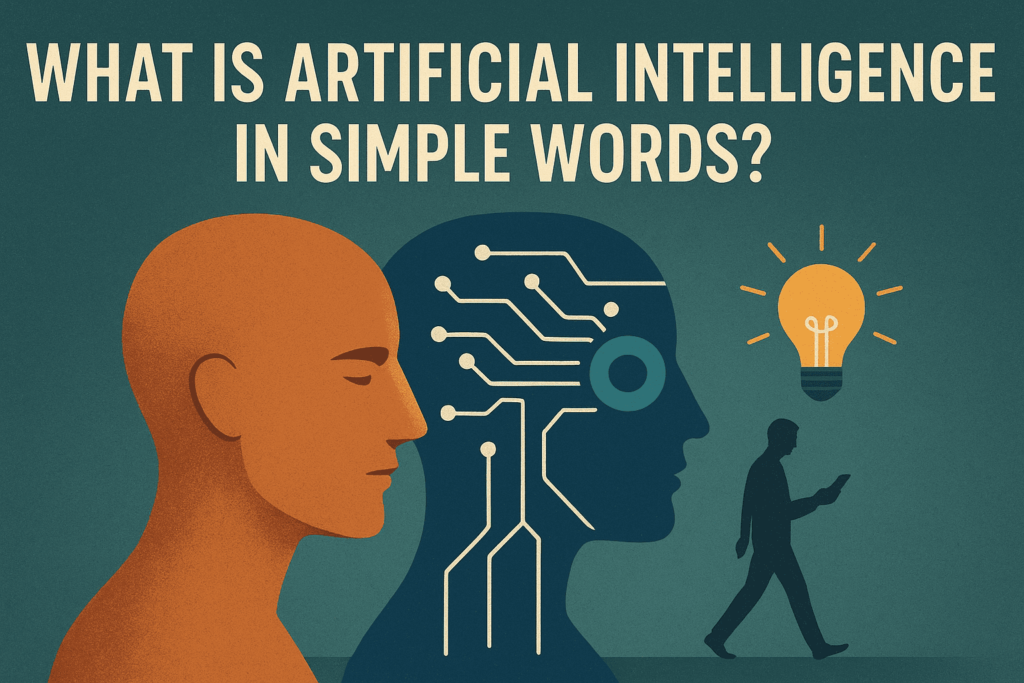
In 2026, AI is a “software-defined” system that can think, learn, and act on its own. It uses data to solve problems just like a human would, but at a much faster speed.
Is AI going to replace human jobs?
AI is not necessarily replacing jobs, but it is changing them. It handles the repetitive, “software-defined” tasks, allowing humans to focus on higher-level strategy, creativity, and the emotional “vibe” of their work.
What is the difference between AI and a regular computer program?
A regular program follows a “software-defined” set of fixed rules. AI, however, can adapt. It learns from new information and changes its behavior to get better results over time.