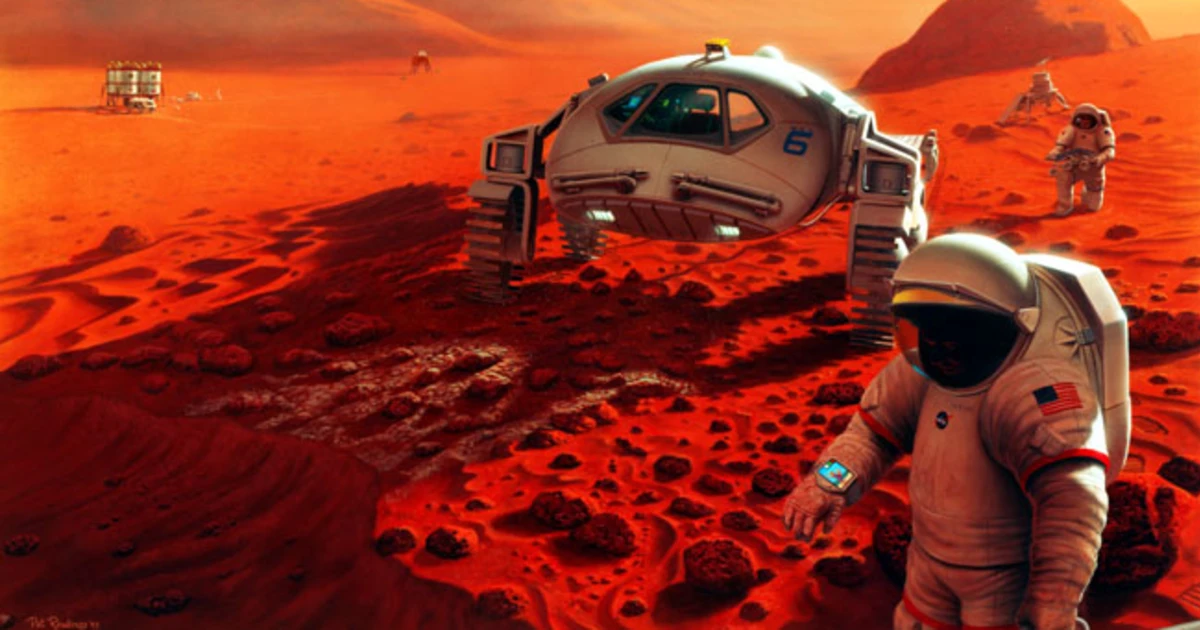
For generations, the idea of stepping off our blue planet and building a civilization on another world was confined strictly to the pages of science fiction novels. We watched silver-screen astronauts grow crops in specialized bio-domes and walk across copper-colored sands, assuming it was a fantasy meant for a distant century.
However, we are currently living through a foundational shift in space exploration. With massive reusable rockets undergoing active testing, state-of-the-art robotic rovers analyzing alien soil, and global space agencies mapping out long-term interplanetary architectures, the fantasy is quickly solidifying into concrete engineering goals.
Yet, as space agencies adjust their strategic roadmaps, a pressing question remains on everyone’s mind: Can Humans Live on Mars in the Future?
To answer this completely, we must strip away the cinematic glamor and look directly at the hard scientific realities, mechanical limitations, and biological hurdles that face humanity as we attempt to become a multi-planetary species.
1. The Brutal Martian Reality Check
To understand the sheer magnitude of the task ahead, we have to recognize that Mars is an incredibly hostile environment. It is not simply a colder, drier version of Earth; it is a barren world that is actively lethal to unprotected terrestrial life.
The planet possesses three primary environmental challenges that our engineers must solve before a single footprint can be permanently stamped into the regolith:
- Atmospheric Asphyxiation: The Martian atmosphere is exceptionally thin—comprising less than one percent of the density of Earth’s atmosphere. Furthermore, it is composed of roughly 95% carbon dioxide. Walking outside without a pressurized suit would cause a human to lose consciousness within seconds due to an immediate lack of oxygen pressure.
- The Radiation Bombardment: Unlike Earth, Mars lacks a global magnetic field (magnetosphere) and a thick atmosphere to shield its surface from the universe’s harsh elements. Consequently, the surface is constantly bombarded by high-energy Galactic Cosmic Rays (GCRs) and Solar Particle Events (SPEs). Spending a year on the surface without heavy shielding would expose an astronaut to dangerous radiation doses, significantly elevating the lifetime risk of cancer.
- Extreme Thermal Dips: Because Mars is farther from the Sun and lacks an atmospheric blanket to trap ambient heat, temperatures are brutally low. While a summer day at the equator might reach a comfortable 20°C, the temperature can plummet to a freezing -73°C on the exact same night. At the poles, it drops even lower, reaching down to a devastating -125°C.
Environmental Metrics: Earth vs. Mars
To visualize the immense evolutionary gap our technology must bridge, consider how the fundamental baseline metrics of Mars contrast with our home planet.
| Planetary Characteristic | Planet Earth | Planet Mars | The Survival Challenge |
|---|---|---|---|
| Atmospheric Pressure | 101.3 kPa (Standard Baseline) | ~0.6 kPa (Thin void) | Requires permanent artificial pressurization to prevent bodily fluids from boiling. |
| Air Composition | 78% Nitrogen, 21% Oxygen, 1% Other | 95% Carbon Dioxide, 2.6% Nitrogen, 1.9% Argon | Demands closed-loop life support systems and oxygen extraction machinery. |
| Average Temperature | +15°C | -62°C | Mandates hyper-insulated habitats and continuous active heating systems. |
| Surface Gravity | 1.0g (Standard) | 0.38g (Low gravity) | Causes long-term muscle atrophy and bone density degradation over multi-year stays. |
2. The Technological Master Keys: How We Survive
Despite the terrifying checklist of planetary dangers, scientists and aerospace engineers remain fundamentally optimistic. The consensus is that physics does not forbid human habitation on Mars; it simply demands highly innovative engineering.
To turn the Red Planet into a viable home, humanity relies on two critical technological pillars:
In-Situ Resource Utilization (ISRU)
The absolute golden rule of space colonization is simple: Live off the land. Shipping every drop of water, breath of air, and gallon of rocket fuel from Earth to Mars is economically impossible. Instead, pioneers must harvest raw materials directly from the Martian environment.
NASA’s Perseverance rover successfully proved the baseline concept using its MOXIE (Mars Oxygen ISRU Experiment) device, which extracted pure, breathable oxygen directly from the thin carbon dioxide atmosphere. Future, scaled-up industrial versions of these devices will produce thousands of tons of oxygen to sustain human habitats and provide the vital oxidizer needed to launch return rockets back to Earth. Furthermore, massive subsurface glaciers discovered by orbital radar will be mined to provide drinking water and hydrogen fuel.
Subterranean and 3D-Printed Habitats
Building traditional glass or metal structures on the Martian surface is a recipe for disaster due to thermal expansion strains, micrometeoroid impacts, and relentless radiation.
Instead, early pioneers will likely live like high-tech cave dwellers. Engineers plan to utilize robotic rovers to print thick protective shells over modular habitats using localized Martian soil (regolith). Alternatively, colonies might be built directly inside ancient volcanic lava tubes. These massive underground caverns provide natural, pre-built structural shields that protect inhabitants from cosmic radiation and extreme temperature swings.
3. The 2026 Outlook: Shifting the Interplanetary Timeline
If you are tracking space exploration news closely, you know that the timeline for sending humans to Mars has experienced a healthy dose of reality. While early predictions suggested crewed flights might launch before the end of this decade, the strategic perspective has matured.
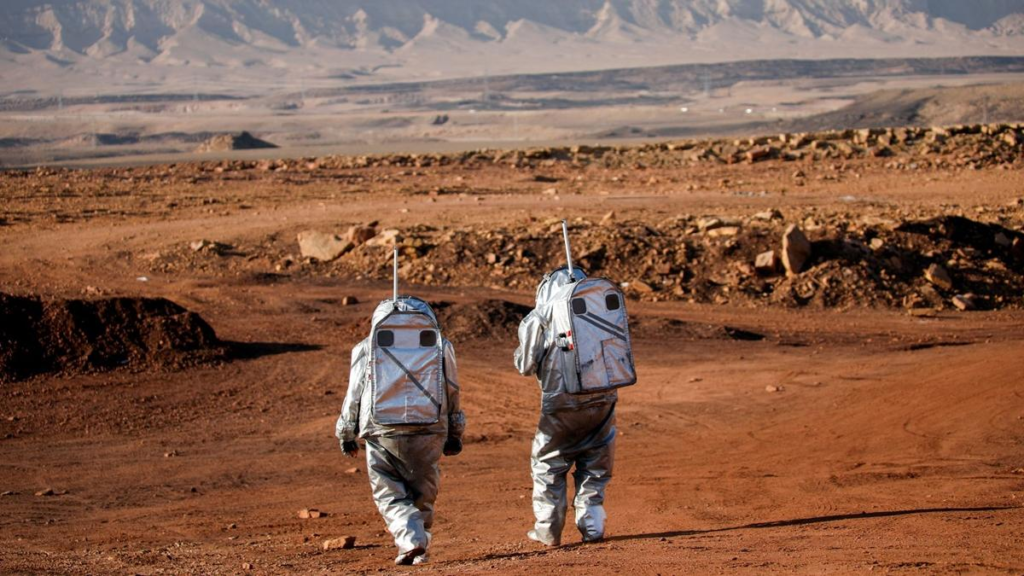
As of mid-2026, leading private aerospace entities and international space agencies have shifted their primary immediate focus toward Moon Base Alpha and the lunar Artemis missions. By using the Moon as a localized, low-risk testing ground, engineers can master deep-space life support systems, long-duration spacesuits, and surface nuclear power plants just a three-day journey away from Earth, rather than committing straight to a multi-month transit to Mars.
Interplanetary Milestone Forecasting
The road map for answering if Can Humans Live on Mars in the Future? is being split into distinct, calculated operational phases.
- Phase 1: Automated Orbital Mapping & Sample Return
- Target Window: Late 2020s
- Primary Objective: Launching robotic missions to retrieve Martian soil samples and deploying advanced orbital relays to map precise underground ice sheets.
- Phase 2: Automated Cargo Starship Transits
- Target Window: Early 2030s
- Primary Objective: Landing uncrewed heavy-payload vehicles loaded with solar arrays, automated mining drills, and initial ISRU fuel factories to build surface infrastructure.
- Phase 3: The First Crewed Exploratory Footsteps
- Target Window: Mid-to-Late 2030s
- Primary Objective: A small team of highly trained scientists and astronauts landing to establish the first operational outpost, focusing entirely on research and basic survival validation.
- Phase 4: Semi-Permanent Modular Settlement
- Target Window: 2040s and Beyond
- Primary Objective: Transitioning from a temporary scientific research station to a permanent, expanding modular colony populated by rotating teams of engineers, agriculturalists, and technicians.
4. The Invisible Enemy: The Psychological and Biological Cost
Even if we build flawless rockets and airtight habitats, the ultimate wildcard in space colonization is the human machine itself. Our bodies and minds evolved specifically for the unique conditions of Earth, and disconnecting from our home planet carries a profound physiological price.
The Low-Gravity Dilemma: Standing on Mars means experiencing only 38% of Earth’s gravity. While bouncing around the landscape might feel effortless initially, prolonged exposure to low-g environments causes the cardiovascular system to weaken, muscles to atrophy, and bones to steadily lose density. Astronauts will be forced to engage in intense, mandatory resistance workouts for several hours every day just to maintain the physical capacity to stand up when they eventually return home.
Furthermore, we cannot discount the mental toll of extreme isolation. A crew living on Mars faces a permanent communication delay with Earth that can stretch up to 20 minutes each way, depending on the orbital positions of the planets. This makes real-time phone calls or video chats with family members completely impossible.
Combined with the absolute monotony of living inside a confined, subterranean habitat for years at a time, looking out the window to see nothing but a desolate, red desert, pioneers will require extraordinary psychological resilience to ward off profound feelings of alienation and depression.
The Definitive Verdict
When we look aggregate at the data, the answer to whether Can Humans Live on Mars in the Future? is a definitive, resounding yes—but it will look completely different than the movies suggest.
Humanity will not be building sprawling, open-air cities or walking through Martian parks anytime soon. For the next several decades, life on Mars will mirror the grueling, highly disciplined existence of scientists operating remote research stations in the depths of Antarctica, combined with the strict safety margins of living aboard a submarine. It will be an existence defined by meticulous resource recycling, automated monitoring, and constant maintenance.
Yet, despite the immense hardships, the drive to reach the Red Planet remains unshakeable. By pushing our technology to the absolute limit to solve the riddles of Martian survival, we will inherently develop revolutionary breakthroughs in water purification, sustainable agriculture, closed-loop green energy, and automated medical care that will drastically improve life right here on Earth. Mars is not an escape hatch from our home planet; it is the ultimate mirror that will force humanity to mature into a truly interstellar civilization.