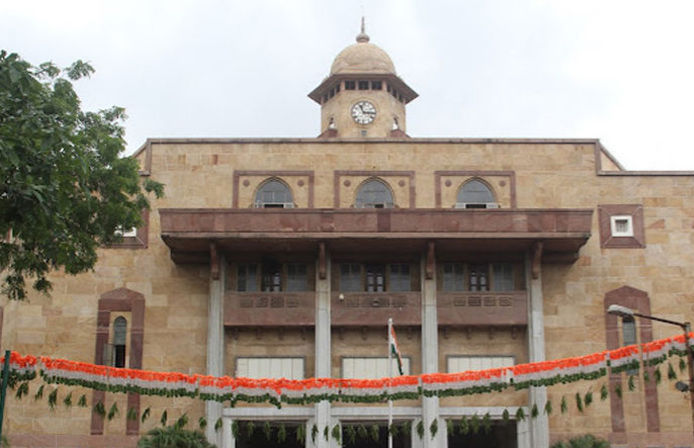
In a pioneering move for the country’s academic and tourism landscapes, the Department of Higher Education has officially cleared the roadmap to establish India’s very first integrated educational center dedicated to historical preservation and luxury tourism. Gujarat University (GU) has secured administrative approval to construct the Institute of Hospitality, Heritage Management, Archaeology and Lifelong Learning in Ahmedabad.
The ambitious project marks a major shift in how cultural assets are managed. Instead of treating historical preservation and commercial hospitality as completely separate industries, the new institute will explicitly blend academic theory with real-world luxury hotel operations. This unique model aims to train a new generation of professionals capable of protecting India’s rich history while building sustainable, world-class experiential tourism ecosystems.
Funding Structure and Project Timeline
The development of this unique multidisciplinary institute involves a significant financial commitment from state education departments to ensure top-tier infrastructure.
The Initial Capital Influx
The higher education department has approved an initial phase grant of ₹10.86 crore to jumpstart the university’s building designs and foundational site clearing.
Strict Compliance and Disbursal Ground Rules
To maintain transparency and structural integrity throughout construction, the state government has placed strict conditions on how the university handles the funds:
- Costing Baseline: All structural plans and architectural cost estimates must strictly match the prevailing Schedule of Rates (SOR) set by the state.
- Norm Compliance: Every brick laid on the campus must follow the official Public Works Department (PWD) structural guidelines.
- Anti-Diversion Clause: The sanctioned funds are strictly locked to this project and cannot be diverted to fill other university budget gaps.
- Utilization Deadline: The university must fully utilize the initial phase funds within a firm two-year window, or the administrative clearance will automatically expire.
Prime Location and On-Campus Luxury Infrastructure
The physical layout of the upcoming institute is designed to maximize public accessibility while giving students direct, hands-on exposure to high-end commercial environments.
The comprehensive table below outlines the geographical layout and planned facilities for the upcoming campus:
| Campus Infrastructure Component | Planned Location & Plot Details | Primary Operational Purpose | Student Practical Benefits |
| Academic & Heritage Wing | 132-Feet Ring Road vacant parcel, Ahmedabad | Core lecture halls, advanced archaeology laboratories, archiving rooms | Deep theoretical grounding in history, excavation analysis, and conservation |
| Five-Star Luxury Hotel | Adjacent to the main academic blocks, near GMDC ground | Fully operational commercial hotel serving business travelers | Direct, on-site internships in front-desk operations, culinary arts, and guest relations |
| Lifelong Learning Center | Integrated complex adjacent to the Andhjan Mandal structure | Continuing adult education, community skill workshops, and tour-guide licensing | Interactive community engagement and real-time public testing spaces |
Bridging the Gap: The Vision Behind the Integration
The establishment of the institute addresses a long-standing challenge in the Indian travel market: the lack of formal, structured training that combines professional hospitality standards with deep historical knowledge.
1. Elevating Experiential Tourism
Modern global travelers are increasingly moving away from basic sightseeing. Instead, they seek immersive journeys where they can truly understand the historical context of ancient sites, such as Lothal or Dholavira. By training students in both hospitality heritage management archaeology and modern business operations, the institute ensures that future tourist hubs will feature accurate historical curation alongside premium customer service.
2. Preserving Cultural Assets Safely
Many historical properties and princely estates across India struggle with maintenance issues due to a lack of specialized local talent. The institute’s curriculum will train students in advanced archaeological preservation techniques, chemical cleaning processes, and sustainable structural restoration. This ensures that opening historical landmarks to commercial tourism will fund their ongoing preservation rather than causing wear and tear.
Administrative Outlook: The creation of the institute is considered a signature project for the university’s current leadership. With the vice-chancellor’s administrative term set to wrap up in June, academic circles are buzzing with speculation about a potential leadership extension to ensure the project maintains its strong initial momentum.